THE BUYING DECISION IN 30 SECONDS
As an Amazon Associate, Buyer Checkpoint earns from qualifying purchases. Links on this page are affiliate links, at no extra cost to you. How affiliate links work here.
Good fit if…
- You sew mostly straight stitches on quilts, bags or garments and want a portable lock-stitch machine, not a zig-zag or embroidery machine.
- You want a float (micro-lifter) of about 0 to 2 mm, which Juki says uses the same idea as its industrial machines to reduce uneven feed on quilts, velvet, knits and thick seams.
- You want speed you can set: Juki rates the TL-18QVP at 55 to 1,500 stitches per minute, with a speed-control knob that sets a cap between 200 and 1,500 SPM on the foot controller.
- You need space for a large quilt. Juki lists a work area of up to 23 inches with the auxiliary table, which is included, plus a knee lifter that raises the foot as high as 12 mm.
- You will drop the feed dogs for free-motion quilting or free-hand embroidery, and you will use the automatic needle threader and the thread trimmer (button or heel on the foot controller).
- You will oil the machine. The manual asks for a few drops of the supplied oil, or New Defrix Oil No. 1 or equivalent, once a day if you sew every day.
Avoid if…
- You need zig-zag, overlock or built-in decorative stitches. The TL-18QVP is a single-needle lock-stitch machine only.
- You will not lubricate a sewing machine, or you want a sealed unit with no daily oiling. The manual requires oil at marked points and a test sew after oiling, and warns that excess oil can stain fabric.
- You want the older TL-2010Q specifically, or you do not care about the float foot, the replaceable attachment plate or the four-step LED. Juki's comparison list gives both models the same speed, size and auto trim; the extra features live on the TL-18QVP product page.
- You need a confirmed authorized Juki dealer on the invoice so warranty service is straightforward. Juki says warranty service is provided by the dealer you bought from, and a November 10, 2026 recheck at delivery ZIP 10001 did not show a named seller on the mobile offer block.
- The live listing is used, open-box, a different model (TL-2010Q, TL-2000Qi or a Collector's Edition you did not choose), or no longer reads TL-18QVP or Haruka.
- You need a published voltage or a published throat measurement beyond the arm size Juki lists (8.5 by 6 inches). The specification table in the manual does not list voltage.
What you are actually buying
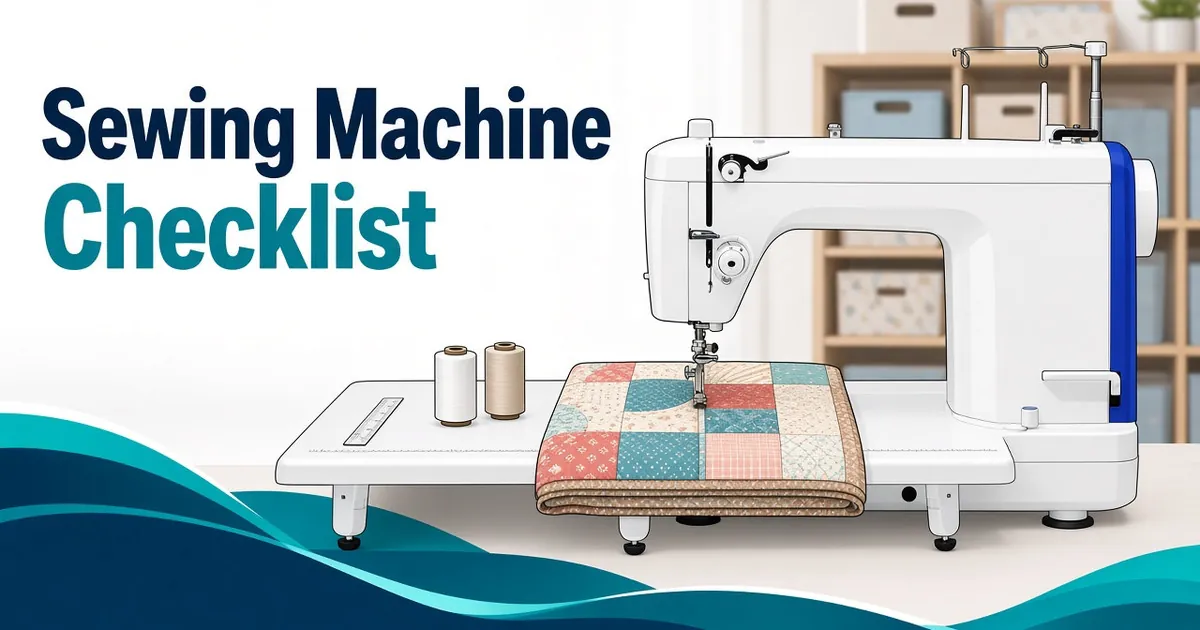
The product on this page is the Juki Haruka TL-18QVP, a single-needle, lock-stitch, portable sewing machine with a die-cast aluminum body. Amazon sells this unit under ASIN B07S2GGPW4. Juki names it Haruka, a Japanese word it glosses as “beyond,” and places it in its semi-professional straight-stitch line for quilting, bags, garments and home decor.
Juki's official specification table lists a speed of 55 to 1,500 stitches per minute, a stitch length of 0 to 6 mm, an arm of 8.5 by 6 inches, an auxiliary table of 23 by 13 inches, a knee-lifter lift of 12 mm, automatic thread trimming, a needle threader, a sub-tension unit, a drop feed, and a float function (micro-lifter). The machine is supplied with the auxiliary table, the knee lifter, the foot controller with a heel-trim function, a foot-switch stopper, several quilting and piecing feet, an even-feed foot, bobbins, an oiler and a cover.
Two features distinguish this model in Juki's own copy. The float foot can sit about 0 to 2 mm above the work, which Juki says helps on quilts, velvet, knits and thick seams. A separate attachment mounting plate can be replaced if the mounting holes wear out. The four-step LED (high, medium, low, off) is also listed as new on this model.
Buyer Checkpoint has not sewn on this machine. Every figure here comes from Juki's TL-18QVP instruction manual, its TL-18QVP and TL-2010Q product pages, its semi-professional comparison list, its US quilting-site warranty FAQ, and the dated Amazon page.
Spec conflicts to settle before you trust a number
Weight. The instruction manual lists 11.9 kg. Juki's product page and comparison list list 11.5 kg / 24.5 lb. The Amazon title on this ASIN says 25.0 pounds; the Amazon specification block says 28 pounds. Plan on a machine you can carry by the handle, but do not treat any one of those figures as exact.
Auxiliary table depth. The manual lists the auxiliary table as 59 by 27.7 cm. The official product page lists 590 by 335 mm (23 by 13 inches) and a combined size with the table of 720 by 335 mm. The 23-inch width is the figure Juki uses for work area; the depth figures do not agree.
Presser-foot lift by lever. The manual lists 7 mm / 9 mm, with 12 mm by knee lifter. The official specification table lists a maximum of 10 mm by lever and 12 mm by knee lifter. The 12 mm knee-lifter figure is the one both sources share.
Hook type. On the same official Juki product page, the feature text says a vertical full rotary hook, while the specification table says a horizontal-axis full-rotary hook. We do not choose between those two lines. Confirm the hook on the machine you receive if hook type matters to your bobbins or service shop.
Needle range. The manual's specification table lists HAx1 #11 and #14. The official product page and comparison list list HAx1 (130/705H) and HLx5, sizes #9 to #18. The needle-threader section of the manual covers needles #11 to #16. Use the needle Juki lists for your fabric, and do not assume the short manual table is the full range.
Overall size. Juki lists the machine at 452 by 350 by 219 mm. The Amazon title and specification block on this ASIN give 25 by 18 by 14 inches, which does not match that millimeter set. Prefer Juki's millimeter figures, and measure the packed carton if your space is tight.
Buyer Checkpoint Fit score
Fit 93/100 for a quilter or bag-maker who wants a straight-stitch-only portable machine with 55 to 1,500 SPM, a 0 to 2 mm float foot, a 23-inch table and a knee lifter, who will oil the machine, and who buys a new TL-18QVP from a seller they have confirmed for Juki's dealer warranty. This score is not raised to fill a publishing slot.
Method: Buyer Checkpoint Fit score for the target buyer profile on the 30/25/20/15/10 framework (Use-case & safety / Documented capability / Integration / Ownership / Supporting evidence). It is an editorial score built from documents, not a laboratory or hands-on test. A hard stop for that profile overrides the total. Other profiles are described under “Avoid if…” without a second numeric score. See the public scoring method.
| Checkpoint | Points | Why this score |
|---|---|---|
| Use-case & safety | 28 / 30 | Juki documents a straight-stitch lock-stitch machine with a float foot, drop feed, 12 mm knee lift, 23-inch table, thread trimmer and needle threader, plus standard electrical and needle-break warnings. Points stay off 30 because it has no zig-zag, the manual requires regular oiling, and a wrong needle or plate can break the needle. |
| Documented capability | 22 / 25 | A full instruction manual, a specification table, a comparison list and two product pages cover speed, float, table, feet, oiling and controls. Juki's own documents disagree on weight, table depth, lever lift, hook type and needle range, which holds this row at 22. |
| Integration | 20 / 20 | It takes household HAx1 needles, includes the auxiliary table and knee lifter, accepts additional industrial-style feet according to Juki, and stores as a portable machine with a handle. Daily oiling and a dedicated sewing table still apply, which holds this row at 20. |
| Ownership | 14 / 15 | Juki's US FAQ gives two years on motors, light, wiring, switches, circuit boards and speed control, and five years on other parts for factory defects, with service through the dealer you bought from. Points stop at 14 because routine service, tension and skipped stitches are excluded, and a November 10, 2026 recheck at delivery ZIP 10001 did not name the Amazon seller or confirm a Juki dealer. |
| Supporting evidence | 9 / 10 | Juki's manual and official pages back every spec used here, and a November 10, 2026 recheck at delivery ZIP 10001 showed ASIN B07S2GGPW4 in stock from Bristow & Ball. Evidence stays at 9: the seller was not named, no delivery-ZIP check was done, Juki documents disagree on several figures, and no hands-on test was done. |
Total: 28 + 22 + 20 + 14 + 9 = 93. A used or unconfirmed-condition machine, a listing that no longer reads TL-18QVP or Haruka, a seller you cannot confirm for Juki's dealer warranty, or a need for zig-zag or decorative stitches is a hard stop for this profile and overrides the 93.
Buying facts that change the decision
Each row pairs a sourced fact with what it changes for the buyer.
| Checkpoint | What the documents say | Why it matters |
|---|---|---|
| Stitch type | Single-needle lock-stitch only (Juki). | No zig-zag or decorative stitches. |
| Speed | 55 to 1,500 SPM; knob caps the controller at 200 to 1,500 SPM. | Useful for free-motion and long seams. |
| Float foot | About 0 to 2 mm micro-lifter (Juki product page and manual). | Thick seams, knits, velvet, quilts. |
| Work area | Up to 23 in with the included auxiliary table (Juki). | Table depth figures disagree; see conflicts. |
| Arm | 8.5 by 6 in (official specification table). | Check your block and ruler clearance. |
| Knee lift | Max. 12 mm (manual and official table). | Hands stay on the quilt. |
| Weight | 11.5 kg / 24.5 lb (product page); 11.9 kg (manual); 25 or 28 lb (Amazon). | Portable, but confirm if you must lift it often. |
| Needles | HAx1 / HLx5 #9-#18 on the product page; #11 and #14 in the manual table. | Match needle to fabric; switch off first. |
| Oiling | Daily if used daily; supplied oil or New Defrix Oil No. 1. | Test-sew after oiling; avoid stains. |
| Trimmer | Button or heel on the foot controller; stopper can disable heel trim. | Needle stops high after a trim. |
| Warranty | 2 years (electrical/speed/light) and 5 years (other factory-defective parts), via the selling dealer. | Confirm the Amazon seller will act as that dealer. |
| In the box | Table, knee lifter, feet, controller, oiler, cover, tools, bobbins, needles (Juki list). | Ruler and echo feet are optional. |
Juki TL-18QVP vs TL-2010Q
Google US autocomplete on November 10, 2026 returned “juki tl-18qvp vs juki tl-2010q” and “juki haruka vs 2010q.” That is the comparison this section answers. Autocomplete also returned “juki tl 18qvp vs janome hd9,” which we do not score here: we did not read Janome's official HD9 documents for this page.
Juki's own semi-professional comparison list gives the TL-18QVP and the TL-2010Q the same cabinet size (452 by 350 by 219 mm), the same listed weight band (11.5 kg on that list), the same speed (55 to 1,500 SPM), and check marks for sub-tension, a speed-control knob and auto thread trimming. The list does not have a column for the float foot.
| Checkpoint | TL-2010Q | TL-18QVP (this page) |
|---|---|---|
| Speed (Juki list) | 55 to 1,500 SPM | 55 to 1,500 SPM |
| Cabinet size (Juki list) | 452 x 350 x 219 mm | 452 x 350 x 219 mm |
| Weight on the comparison list | 11.5 kg | 11.5 kg |
| Sub-tension, speed knob, auto trim | Yes | Yes |
| Float (micro-lifter) | Listed, about 0 to 2 mm | Not described on the TL-2010Q page we read |
| Replaceable attachment plate | Listed as new on the TL-18QVP page | Not described on the TL-2010Q page we read |
| LED | Four-step brightness (high, medium, low, off) | LED at the needle; no step switch described |
| Knee lift | 12 mm | 12 mm |
What the product pages add. The TL-18QVP page lists three items as new: the float (micro-lifter) of about 0 to 2 mm, a replaceable attachment mounting plate, and a four-step LED brightness switch. The TL-2010Q page describes an LED at the needle, sub-tension, a 200 to 1,500 SPM speed knob, auto trim, a knee lifter to 12 mm, drop feed and an even-feed foot, but it does not describe a float function or a replaceable mounting plate.
If you already own a healthy TL-2010Q and only want more speed or a wider bed, Juki is not promising those upgrades. The reason to pay for a TL-18QVP, on Juki's own pages, is the float foot, the replaceable plate and the LED steps. If you do not need those, the older model is the same speed and size on the comparison list.
For other equipment used in small-batch making, see our manufacturing and printing equipment hub.
Setup, oiling and daily use
Table and knee lifter. The manual has you open the auxiliary-table legs fully, lock the table to the machine and match the heights, then fit the knee lifter, which Juki rates at 12 mm of lift so you can keep both hands on the work. A cover in the table opens so you can reach the bobbin without removing the table.
Float foot. Turn the micro-lifter dial so the presser foot sits slightly up, up to about 2 mm, for fabrics that feed unevenly. The manual says the foot starts to float when the marker line on the dial meets the end face of the base. If you are not using the float, tighten the dial against the base. If you fit a quilting foot or walking foot, check that the dial is firmly tightened first.
Trimmer and speed. You can trim needle and bobbin threads with the push-button or by pressing the heel of the foot controller; a supplied stopper turns the heel-trim off. After a trim, the needle stops at its highest point, and Juki says you can start sewing again even if the bobbin thread is not visible on the throat plate. The speed knob caps the foot controller between 200 and 1,500 SPM. Holding the needle up/down switch sews a slow single stitch, which Juki recommends at corners.
Oiling. Switch off and unplug first. The manual says to oil the marked points with a few drops of the supplied oil or New Defrix Oil No. 1 or equivalent, once a day if you sew every day, and more (about 5 to 7 drops) after unpacking or after about two months unused. Do not flood the needle bar or hook, or oil can reach the fabric. Always test-sew after oiling. Keep the oil away from children, and do not get it in your eyes or on skin.
Needle and safety. Switch the machine off before threading, changing a needle or changing a foot. Use the correct throat plate; a wrong plate can break the needle. Do not pull or push the fabric while stitching. The safety section also says not to leave the machine plugged in unattended, not to use it outdoors, and to keep fingers away from the needle.
Warranty, seller and what to confirm
Terms. Juki's US quilting-site FAQ, read November 10, 2026, states a limited warranty of two years on motors, light assembly, wiring, switches, circuit boards and speed control, and five years on all other parts related to factory defects. Routine service, tension and skipped stitches are not covered. Warranty service is provided by the dealer you bought the machine from. Juki also says it sells machines through an authorized dealer network, not direct to the public on that FAQ.
Amazon seller. A November 10, 2026 recheck at delivery ZIP 10001 showed ASIN B07S2GGPW4 in stock as a new-looking featured offer from Bristow & Ball. The page stated that a third-party seller holds the offer. We could not confirm from that page that the seller is a Juki authorized dealer. If you need the written warranty path, ask the seller in writing, before you buy, whether they will handle Juki warranty service as the selling dealer, and keep the invoice and original packing.
Registration and packing. Juki points owners to its registration page. The manual tells you to keep the instruction book with the warranty. If a later repair requires original packing, as some Juki household policies do on related models, keeping the carton is cheap insurance; this page does not treat that as a confirmed TL-18QVP rule because the TL-18QVP FAQ we read does not repeat that packing line.
How to confirm the live listing without trusting a dated note
Open ASIN B07S2GGPW4 and read the title. You want Juki TL-18QVP or Haruka TL-18QVP, not the TL-2010Q, the TL-2000Qi, a Collector's Edition you did not choose, or an accessory such as a foot or a table sold alone. Check that the offer is for a new machine.
Then read who ships and sells it. A November 10, 2026 recheck at delivery ZIP 10001 showed the machine in stock from Bristow & Ball. Ask the seller to confirm the model, that the machine is new, and how Juki warranty service will be handled. A dated note is not a promise that the same seller, stock or price will be there; adding the machine to your cart does not reserve it and does not lock a price.
Juki TL-18QVP verdict in brief
Each line below stands on its own and names its source date. None of it comes from a hands-on test.
- Juki rates the Haruka TL-18QVP at 55 to 1,500 stitches per minute, with a speed knob that caps the foot controller between 200 and 1,500 SPM (Juki product page and comparison list, read November 10, 2026).
- Juki describes a float (micro-lifter) of about 0 to 2 mm on the TL-18QVP for quilts, velvet, knits and thick seams, a feature its TL-2010Q product page does not list (Juki pages, read November 10, 2026).
- Juki's comparison list gives the TL-18QVP and the TL-2010Q the same cabinet size, the same listed 11.5 kg weight, the same speed and the same sub-tension, speed knob and auto trim (comparison list, read November 10, 2026).
- Juki's official pages disagree with each other and with the manual on weight (11.5 vs 11.9 kg), auxiliary-table depth, lever lift and hook type (documents read November 10, 2026).
- The manual requires oil at marked points, once a day if the machine is used every day, using the supplied oil or New Defrix Oil No. 1 or equivalent, and a test sew after oiling (instruction manual, read November 10, 2026).
- Juki's US FAQ gives two years on motors, light, wiring, switches, boards and speed control, and five years on other factory-defective parts, with service through the selling dealer (FAQ read November 10, 2026).
- Amazon ASIN B07S2GGPW4 showed the TL-18QVP in stock from Bristow & Ball in a November 10, 2026 recheck at delivery ZIP 10001.
Fit check: answer three questions before you compare offers
Answer from the stitches you need, how you will maintain the machine, and how you plan to buy it. Nothing is pre-selected.
No data is transmitted. Nothing is selected until you choose an answer. An unanswered question stays on hold rather than recommending a purchase.
FAQ
What is the difference between the Juki TL-18QVP and the TL-2010Q?
Juki's comparison list gives both machines the same speed, cabinet size and auto trim. The TL-18QVP product page adds a 0 to 2 mm float foot, a replaceable attachment plate and a four-step LED, which the TL-2010Q page we read does not list.
Does the Juki TL-18QVP sew zig-zag stitches?
No. Juki describes it as a single-needle, lock-stitch, portable machine. It is a straight-stitch machine for quilting, bags, garments and similar work.
How fast does the Juki TL-18QVP sew?
Juki rates it at 55 to 1,500 stitches per minute. A speed-control knob sets a maximum between 200 and 1,500 SPM when you use the foot controller.
What is the float foot on the TL-18QVP?
It is a micro-lifter. Juki says the presser foot can float about 0 to 2 mm above the material to reduce uneven feeding on quilts, velvet, knits and thick seams. The manual explains how to set and tighten the dial.
How much space does the Juki TL-18QVP need?
Juki lists the machine at 452 by 350 by 219 mm and a work area of up to 23 inches with the included auxiliary table. The official table depth and the manual's table depth do not agree, so measure if your space is tight.
Does the Juki TL-18QVP need to be oiled?
Yes. The manual says to put a few drops of the supplied oil, or New Defrix Oil No. 1 or equivalent, at marked points once a day if you sew every day, and to test-sew after oiling.
What warranty does the Juki TL-18QVP have?
Juki's US FAQ gives two years on motors, light assembly, wiring, switches, circuit boards and speed control, and five years on other parts for factory defects. Service is through the dealer you bought it from; routine service, tension and skipped stitches are not covered.
Sources and research limits
- Juki TL-18QVP instruction manual (Sewing machine for professional use), read November 10, 2026: safety rules, specification table, accessories, auxiliary table and knee-lifter setup, float-function dial, LED steps, thread trimmer, speed knob, lubrication, needle and plate warnings.
- Juki Household Sewing Machine Div. TL-18QVP (Haruka) product page, read November 10, 2026: float function, sub-tension, speed range, attachment plate, LED, 23-inch work area, specification and accessory tables, arm size, hook-type wording, optional feet.
- Juki Household Sewing Machine Div. semi-professional comparison list and TL-2010Q product page, read November 10, 2026: shared speed, size, weight on the list, sub-tension, speed knob, auto trim, and features described or not described on the TL-2010Q page.
- Juki US quilting-site FAQ (jukiquilting.com/faq) and Haruka TL-18QVP dealer page, read November 10, 2026: two- and five-year limited warranty, dealer service path, authorized-dealer distribution, suggested retail (recorded internally, not printed), catalog and manual links.
- Amazon listing ASIN B07S2GGPW4, read November 10, 2026: title, brand, model name, dimensions and weight on the Amazon blocks, offer in stock from Bristow & Ball. Price was recorded internally and is not frozen here.
Buyer Checkpoint did not sew on this machine and did not measure speed, vibration, stitch quality or table size. Conflicts in Juki's own documents are shown, not averaged. The Amazon seller was not named on the mobile page we read and was not confirmed as a Juki authorized dealer. No delivery-ZIP check was done.
Amazon Associates disclosure
As an Amazon Associate, Buyer Checkpoint earns from qualifying purchases. Amazon product and cart links may earn Buyer Checkpoint a commission at no extra cost to you. Confirm the exact model, seller, warranty, return terms and current price before buying. We do not state unverified availability or commissions.