THE BUYING DECISION IN 30 SECONDS
Dual-card capture protects a recording workflow, not an external backup plan.
As an Amazon Associate I earn from qualifying purchases. Links on this page are affiliate links, at no extra cost to you. How affiliate links work here.
Scope: documentary buying guide. The original research, technical caveats and product limitations are preserved below; no hands-on testing is claimed.
Buyer Checkpoint editorial score
Canon EOS R6 Mark II
Conditional scenario-specific fitScore caveat: This is the original article’s scenario-specific editorial technical-fit score, not an Amazon customer rating, laboratory result, universal recommendation or safety certification. The original scoring framework and deductions are retained in the evidence below. If a hard constraint fails, do not buy regardless of the score.
Evidence, specifications and ownership limits
Affiliate disclosure: As an Amazon Associate I earn from qualifying purchases. Some links on this page are affiliate links, at no extra cost to you. How affiliate links work here.
CAMERA BUYING GUIDE / PHOTOGRAPHY & VIDEO PRODUCTION
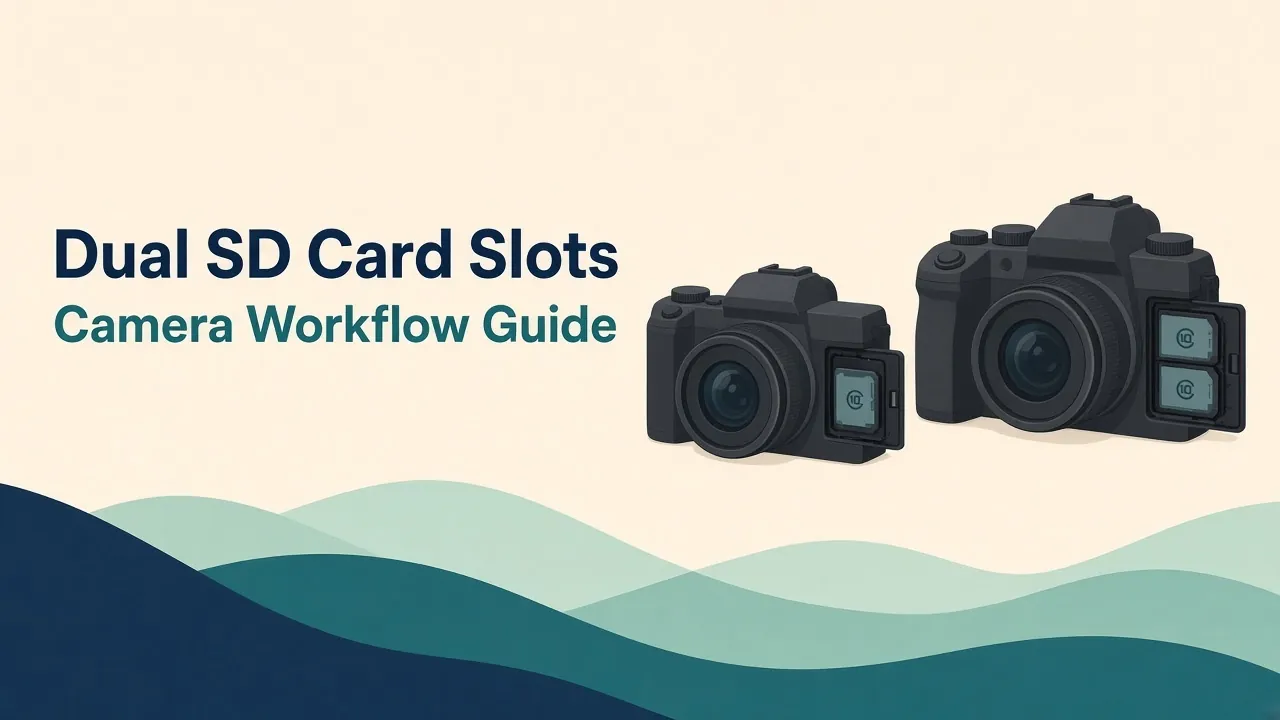
A spec-sheet comparison can make the EOS R8 and EOS R6 Mark II look deceptively close. Both are 24.2-megapixel Canon RF-mount full-frame cameras. The R8 has one SD slot. The R6 Mark II (ASIN B0BL7ZVY78) has two UHS-II SD slots and can record the same still image to both cards in Rec. to multiple mode. For unrepeatable paid work that requires in-camera redundancy, that difference is decisive. For repeatable shoots, the R8 remains a legitimate lower-cost choice.
The actual buying question is what happens around the image: whether the camera can write the same important file to a second memory card as you shoot, how long you can work without a battery change, whether in-body stabilization matters with the lenses you own, and whether the deeper grip and controls save time. Those are operational differences, not promises of magically better photographs.
This guide is for US photographers comparing these specific original-generation bodies: someone moving from an EOS R8 to an EOS R6 Mark II, choosing a used or new-old-stock body, or considering the R6 II because a job has become more demanding. It also explains why the newer R8 Mark II and R6 Mark III change the 2026 buying calculation. It is not a claim that every hobbyist needs two card slots.
The 25-second answer
Buy the R8 if you care most about a compact, less expensive full-frame body, work on repeatable shoots, can accept one card, and would gain more from a better lens than from dual media. Favor the R6 Mark II if you regularly shoot paid, unrepeatable sessions and will actually set it to record the same photos to two SD cards, or if IBIS, the larger battery, the mechanical shutter and faster handling matter to your work. Do not pay the premium for two slots alone if you will leave the second slot empty.
A second card protects against some single-card failures, not against every failure, theft, accidental deletion, or losing the camera. You still need a backup workflow. Canon describes the recording modes and their limitations in the R6 Mark II manual.
Canon EOS R6 Mark II — evaluated for the specific buyer who requires two simultaneous in-camera still-image copies during time-sensitive assignments. This is not a universal quality score and not Amazon's customer rating.
Buy if: you regularly shoot unrepeatable paid work and will actually set the R6 Mark II to Rec. to multiple so the same stills are written to two cards. IBIS, the larger battery and mechanical shutter are useful extras, but the dual-slot workflow is the hard reason to pay the premium.
Don’t buy if: you shoot repeatable or controlled work, you will leave the second slot empty, or you mainly need a lighter body and would rather spend the difference on a better lens. The original R8 is not a defective camera for those jobs.
STRONGEST CONDITIONAL PICK FOR TWO-CARD STILL CAPTURE
Canon EOS R6 Mark II body — ASIN B0BL7ZVY78
Once you have confirmed you need and will use Rec. to multiple, this is the listing to check.
Confirm body-only, new condition, and that you will set Rec. to multiple. Two cards do not replace a second camera or external backups.
Fit check
Three answers. The card on the right updates with the path that fits.
Is in-camera dual-card redundancy required for your work?
Will you actually use the second card slot?
Is weight and lens budget more important than dual slots?
The actual comparison: 10 decisions, not 100 specifications
| Buying factor | Canon EOS R8 (original) | Canon EOS R6 Mark II | Why it matters |
|---|---|---|---|
| Recording slots | One SD slot, UHS-II compatible | Two SD slots, both UHS-II compatible | R6 II can duplicate compatible recordings in camera; R8 cannot |
| Full-frame resolution | Approx. 24.2 MP | Approx. 24.2 MP | No major resolution argument for upgrading |
| In-body image stabilization | No IBIS | IBIS built in | Useful with certain non-stabilized lenses and for handheld work; does not freeze moving subjects |
| Shutter choice | Electronic first-curtain and electronic shutter | Adds a fully mechanical shutter | Different options for flash and motion-sensitive situations |
| Battery family | LP-E17 | LP-E6NH family | Larger battery and longer rated endurance on R6 II; carry spares either way |
| Handling | Smaller, lighter body | Deeper grip, joystick, more controls | More comfortable for long workdays or large lenses, but subjective |
| Camera weight with battery/card | About 461 g | About 670 g | R8 saves roughly 209 g before lens choice |
| Lens mount | Canon RF; adapted EF with compatible adapter | Same | Existing compatible lenses can move between bodies |
| Media backup workflow | Offload or back up after capture | Optional simultaneous internal recording | Useful where a single-file loss would be unusually costly |
| US body price example, Oct. 2026 | Approx. $1,399 promotion | Approx. $1,999 promotion | About $600 gap at that snapshot, not a stable price difference |
These body specifications are documented by Canon R8 support and Canon R6 Mark II support. The indicative promotional prices are dated October 2026 and should not be treated as live Amazon quotes. The lenses, batteries, media and accessories in a given bundle vary by SKU.
Why equivalent-looking photos are not an R6 II sales pitch
When both cameras use comparable lenses, exposure, technique and appropriate settings, their still-image output is close enough that an entire purchase should not revolve around tiny online JPEG comparisons. A lens that focuses reliably at the aperture you use, enough light, and your processing choices can outweigh a body upgrade. That is particularly true for product photography with controlled lighting, landscape work from a tripod, casual portraits and family photography.
The R6 II asks the buyer to pay for workflow capability. There is an important distinction between needing that capability and simply liking the idea of owning the better-equipped camera. A person making prints of repeatable studio subjects might not care about dual cards. A photographer covering a one-time graduation, paid conference or live performance may care a lot. Weddings are one example among many, not the definition of the audience.
The one-slot versus two-slot decision: what you actually get
With the EOS R8, a captured photo has one internal recording destination: the card installed in the camera. You can maintain a disciplined workflow by using reputable cards, changing them at reasonable intervals, transferring promptly, verifying copies and keeping backups. What you cannot do is have the R8 create a duplicate on a second internal card at the same instant.
With the EOS R6 Mark II, you can put two compatible SD cards into the body and choose Rec. to multiple for still photos. In that mode, the camera records the same image to both cards. This is different from merely having two slots, and different from letting the second card take over after the first one fills.
The meaningful benefit is narrower than the sales pitch you may hear. If one card later proves unreadable while the other remains intact, a simultaneous second copy may preserve the photographs. Two cards do not create two cameras, prevent every corrupted capture, substitute for careful handling, or protect against somebody taking the bag containing both cards.
Three modes that buyers confuse
Standard. The camera writes to the selected card. A second card inserted in the body does not necessarily mean every photo was duplicated.
Auto switch card. Recording moves to another card when capacity requires it. That extends recording capacity, but is not simultaneous redundancy. If the first card is lost before files are copied elsewhere, files on that first card remain at risk.
Rec. to multiple. The camera creates copies of compatible still-photo or movie recordings on both media in the supported mode. Available time/frames can be limited by the card with less remaining capacity; a full card can stop shooting in this mode. That limitation makes the card-planning tool below relevant.
Canon's exact menu instructions are the authority, not a third-party screenshot from another Canon body or firmware version. Check both Stills Rec options and Movie Rec options separately. A setting selected for still photos is not proof your video files are also duplicated.
A failure scenario without manufactured fear
Consider a photographer completing 900 product images across several paid locations. Their client cannot easily reassemble all the subjects. If one SD card becomes unreadable before a verified offload, recovery could be costly and uncertain. If the camera recorded each image to two tested cards and one remains healthy, the photographer has a second chance. That scenario justifies evaluating redundancy; it does not quantify the probability of card failure. We have no measured rate for either Canon camera that would support a claim such as “one in every X shoots will be lost.”
Now consider someone photographing their own tabletop projects at home, where the scene can be recreated. They may reasonably choose the R8, invest the difference in a suitable lens and perform immediate external backups. Buying the R6 II solely to avoid an extremely low-frequency scenario would not automatically be rational.
A better way to decide: classify the work, not the job title
Three buyer groups make the most sense.
Unrepeatable paid work. Conferences, ceremonies, school portraits with tight deadlines, performances, corporate events and some location assignments can be difficult or impossible to repeat. If your contract or workflow expects a second media copy at capture, the EOS R8 is a hard-stop mismatch: it has one slot. The R6 II is technically capable of the requested setup when correctly configured.
Repeatable or controlled commercial work. E-commerce product photography, food sets, property interiors and studio portrait sessions may be rescheduled or repeated at some cost. Some of these clients nevertheless require capture redundancy; others prioritize lighting, tethering workflow, lens sharpness or speed. Do not let our label “paid work” override the actual contractual requirement.
Travel, family and enthusiast use. The smaller R8 can make sense for a lighter kit and spending more on glass. Many buyers in this group would gain very little from recording the same snapshot to two SD cards. A second battery and an appropriate lens may deliver more practical value.
The key question is whether losing the only in-camera copy would cause an actual, material problem before your next verified backup. The answer depends on the work, not on whether the photographer calls themselves a professional.
The $600 question: buy the stronger body or a more useful lens?
A US October 2026 promotional example put the R8 body around $1,399 and the R6 Mark II around $1,999. The difference is about $600 at that specific snapshot. It may disappear, grow or reverse when promotions end or bundles change; compare like-for-like US new body-only offerings. The reference is a dated October price report, not a fixed Amazon price guarantee.
What else might that premium buy? It could contribute to a lens that better fits your subjects, spare batteries, reliable media, a protective bag, storage, lighting or professional backup equipment. The right answer changes drastically depending on what you already own. Do you have only a basic variable-aperture kit lens? Upgrading the lens may matter more than the body. Do you already have excellent glass and a paid assignment with no chance of a reshoot? The R6 II's operational protections may take priority.
Also be wary of bundles. An “R6 II kit” is not equivalent to the specific body-only affiliate ASIN discussed here. A price comparison is invalid if one listing includes a lens, several accessories or an imported variant and the other does not. Price-neutral Buyer Checkpoint scoring evaluates whether the camera fits a defined job, while price and ownership cost belong in a separate economic decision.
IBIS, battery and controls: when the premium earns its keep without card redundancy
IBIS: useful, but not a universal low-light shortcut
The original R8 lacks sensor-shift in-body stabilization. The R6 II adds it. With a compatible stabilized lens, Canon's coordinated system may improve handheld results for subjects that remain relatively still. It cannot freeze a moving child, athlete or speaker; those subjects still demand appropriate shutter speed, autofocus and technique. If you work on a tripod with flash or mostly shoot at fast shutter speeds, IBIS may not be the deciding factor.
Importantly, the R8 Mark II introduced in September 2026 does include IBIS. Do not read an old original-R8 comparison and assume every camera carrying “R8” in its name still lacks stabilization.
Battery and handling are more than convenience on long assignments
Canon's rated endurance favors the R6 II's larger LP-E6NH battery over the R8's LP-E17. Actual results vary with ambient temperature, display settings, burst rates, video and lens use. The R6 II also gives buyers a deeper grip and more direct controls. This can be genuinely helpful with a heavy zoom over a long day, although smaller-handed photographers may prefer the R8.
Neither point should be inflated. The R8 can work all day with a sensible battery rotation and the right strap; the R6 II can still run out of battery or be uncomfortable for a particular person. Try both bodies if ergonomics are a major factor.
Shutters and flash need an actual workflow check
The R6 II offers a fully mechanical shutter, electronic first-curtain and electronic shutter options; the original R8 does not have the same fully mechanical choice. Electronic shutter modes may introduce rolling-shutter artifacts under certain motion or lighting conditions, while flash synchronization and flicker behavior depend on selected settings. Do not decide from a frame-per-second headline alone. Check the manual against your strobes, subject movement and lighting before paying for a body.
Interactive decision desk: should you pay for a second card slot?
Use the decision tool below to evaluate your workflow, not to label a model universally good or bad. It asks about repeatability, capture-time duplication, backup habits and how you value portability. It does not calculate the statistical probability of equipment failure. The tool has an on-page answer even if Blogger strips JavaScript.
Four-question camera buying check
A sensible result is not automatically a sales recommendation. If your job requires mirrored capture and your budget cannot cover the R6 II, the answer is not to buy the R8 and hope: consider renting, buying later, or changing the assignment workflow. If the extra SD slot has no practical purpose for you, leave the R6 II premium for things that do.
Two-slot storage planner: why you need capacity on both cards
A common error is to buy a 256GB card and a 64GB card, enable simultaneous recording and expect the larger card's full capacity to be useful. In mirrored still recording, the smaller card constrains how long you can keep writing copies to both. Choose compatible cards with enough capacity for the same workload, and use manufacturer-specified formats/speed classes for your shooting modes.
Estimate SD capacity for each mirrored card
The tool estimates storage, not maximum burst performance or continuous-video capability. A card marked “fast” may have a much lower sustained write rating than its maximum advertised read speed. High-bitrate movies require their own validation against Canon's recording-mode tables. Keep an organized rotation, format in-camera only after backups are verified, and never assume two cards have identical usable capacity simply because the packaging shows the same number.
How to set up R6 Mark II recording without a false sense of safety
- Insert two healthy, camera-compatible SD cards and check that the camera recognizes both.
- Open the camera's recording/card selection menu; review Stills Rec options and choose Rec. to multiple when mirrored still-photo capture is needed.
- Check the selected image formats, card playback selection and whether your expected file types are being written to both slots. For movies, verify Movie Rec options separately and test the actual intended codec/frame rate.
- Make several test images, shut down safely, inspect both cards with a computer and confirm that two copies exist and can be read. A second icon on the camera screen is not an audited backup.
- Watch free space on both cards. In simultaneous mode, a full card can stop recording rather than silently change to the other card.
- After the session, create verified independent copies on separate storage media and preferably a separate location before formatting either SD card.
This procedure does not replace Canon's exact R6 II recording instructions. Card behavior can depend on image/video format and firmware. Test before the assignment, not while a client is waiting.
What about the newer Canon R8 Mark II and R6 Mark III in 2026?
This is the most important context missing from comparisons written when the original R8 launched. Canon announced the EOS R6 Mark III in November 2025 and the EOS R8 Mark II in September 2026. You should not buy a discontinued-generation body by assuming it represents the newest available technology. However, the newer bodies do not erase the basic economic question of one slot versus two.
Original R8 (this comparison): 24.2MP full frame, one UHS-II-compatible SD slot, no IBIS. Best value depends on its actual discount, your lens budget and whether single-card capture is acceptable.
R8 Mark II (2026): remains a single-SD-slot camera, but adds IBIS, updated handling and autofocus refinements. Canon announced an estimated body price of $1,899. It addresses some original-R8 shortcomings, but does not solve the need for two in-camera SD copies. See Canon's R8 II announcement and technical support.
R6 Mark II (this comparison): two SD UHS-II slots, 24.2MP, IBIS, mature handling and a potential discount after its successor. For buyers who want two of the same media type and a clear in-camera duplication option, it remains interesting when the purchase price is attractive.
R6 Mark III (2025): a newer 32.5MP body with one CFexpress Type B slot plus one SD UHS-II slot, not two SD slots. It may be a stronger performance/video purchase, but requires checking the correct two-media workflow and buying the appropriate cards. It is not a drop-in equivalent to a buyer's existing pair of SD cards. See Canon's R6 III specifications.
For a new 2026 buyer, the broader decision could be R8 original vs R8 II vs R6 II vs R6 III. We keep the detailed comparison focused on R8 vs R6 II because that is the concrete high-intent purchase question, while linking successors as relevant alternatives rather than pretending they do not exist.
Buyer Checkpoint purchase economics: the actual total cost
The body price alone does not determine the best value. Build a short, realistic budget for the next 12 months:
- Camera body and tax — verify US market, seller, warranty status and whether this is the body-only configuration.
- Lens plan — an RF lens may be your most consequential purchase, and the cameras cannot create sharp subjects that a mismatched lens fails to capture.
- Media — on the R6 II, two compatible SD cards of useful capacity, potentially additional rotation sets and a trustworthy reader. Mirror mode consumes equivalent space on each card.
- Power — batteries and charging. R8 and R6 II use different battery families; a switch might strand accessories you already own.
- Protection and workflow — straps, dry storage, verified backup drives, offsite copies, software and a realistic plan for corruption or gear damage.
- Time — practice time learning new controls and verifying your photo/video settings before important work.
If you already own an R8, the upgrade price is the R6 II purchase minus the actual proceeds of selling or trading your R8, plus needed accessories and taxes. That is very different from comparing two MSRP labels. If you are choosing a first full-frame body, evaluate the complete lens-plus-body kit rather than shopping body specifications in isolation.
Who should not buy the R6 Mark II because of this article?
Do not buy it merely because a comparison chart marks “two slots” as better. If you shoot repeatable content, already offload frequently and prefer small/light gear, an R8 may be the more sensible tool. If your main need is the absolute newest autofocus or advanced hybrid-video feature set, include the 2026 successors in the shortlist. If you cannot make two verified copies in your actual shooting format, the words “dual slots” in a product description are not enough.
And if what you truly require is continuous mission-critical redundancy for both camera and media, a single R6 II still fails half that requirement. Consider a second camera body and a broader failure plan. A dual-card slot is one protection layer, not an all-risk insurance policy.
Amazon US buyer checkpoint: verify the exact offer
Our recommended purchase candidate for buyers who need the two-SD workflow is the Canon EOS R6 Mark II body only, associated in the examined US listing with ASIN B0BL7ZVY78. This is not a kit-lens offer. The listing displayed a 4.7-star aggregate and selectable new offers in our research, including reputable photo-market sellers; the exact buy box, price, delivery region and seller can differ by account and date.
Before paying, check that the selection says New, the model is EOS R6 Mark II, the package is body only if that is what you priced, the listing is not a different regional/imported kit, and you are satisfied with seller, returns and warranty. Price around $1,999 was observed in late October promotions but is not a promise of today's price. Avoid using a slightly cheaper kit listing as evidence that this particular ASIN includes the lens you want.
Qualified buying direction: Choose the R6 II if your own buying requirements include two simultaneously writable SD cards and its additional features justify the all-in cost. Otherwise, the original R8 is a legitimate lower-cost technical alternative—not a defective camera.
Paid link — we may earn a commission from qualifying purchases. Verify the selected new offer, body-only variant, seller and current price.
Frequently asked buying questions
Can the EOS R8 shoot professional-quality photos with one card slot?
Yes. A single-slot body can produce excellent photographs and can be appropriate for many paid assignments. Its limitation is capture-time in-camera media redundancy, not professional image quality. If your contract or risk policy requires two simultaneous copies inside the camera, the original R8 cannot meet that requirement.
Is the R6 Mark II image quality noticeably better than the original R8?
They use closely related 24.2MP full-frame imaging systems. In typical still photography with comparable lenses and settings, buy based on workflow differences before assuming a large image-quality gain. More expensive controls or IBIS can improve the shooting experience without producing inherently sharper shots in every situation.
Does inserting two SD cards automatically back up every photo?
No. Select Rec. to multiple for the relevant still or movie mode and verify recorded files on both cards. Auto switch card is a capacity-continuation function, not mirrored capture. Canon's menu documentation distinguishes these modes.
Can the R6 II duplicate RAW photos to both cards?
Canon supports simultaneous still-image recording to multiple compatible cards. Confirm the selected image quality and recording mode in-camera, make a test capture and read both cards independently. Do not assume a particular RAW+JPEG separation mode constitutes two identical RAW copies.
Does dual-card capture eliminate the need for backups?
No. Both cards can be lost together, the camera can be stolen or damaged, and both copies can contain the same mistaken exposure. Make separate verified copies after capture, with one stored away from the original media. Two media slots reduce certain risks but do not eliminate them.
Is IBIS worth upgrading from the original EOS R8?
Potentially, if you shoot handheld with lenses or shutter speeds where sensor stabilization helps. It is less important for tripod-based or flash-lit work and does not freeze moving subjects. Compare your specific lenses and shooting conditions. The R8 Mark II already has IBIS, so do not confuse it with the original R8.
Why not buy the newer R6 Mark III instead?
It is a genuine alternative for buyers seeking newer imaging and video capabilities. But its two slots use different card families—CFexpress Type B plus SD—whereas the R6 II has two SD UHS-II slots. Price, media costs, video requirements and your preferred duplication workflow determine which makes more sense. We have not commercially qualified the R6 III Amazon listing in this article.
Why include the original R8 when the R8 Mark II exists?
Because original R8 inventory and discounts can still change the entry price. A buyer choosing between an original R8 and an R6 II needs the true original-R8 specifications. We explain the 2026 R8 II so shoppers do not mistake the older model for Canon's newest entry-level full-frame camera.
Which is better for travel or casual portraits?
The smaller R8 often makes sense if the loss of internal card mirroring is acceptable and the budget difference can be invested in suitable lenses. Weight, battery life and grip feel still matter. The R6 II is not automatically the better personal camera merely because it has more controls.
How large should two mirrored SD cards be?
Estimate the number of images multiplied by the actual measured average size of each saved file, add a capacity margin and provision each card for the result. A 256GB card paired with a 64GB card does not provide the capacity of two 256GB mirrored cards. Confirm usable formatted capacity and video speed requirements separately.
If the R6 II and R8 II are close in price, which should I choose?
If simultaneous two-card recording is non-negotiable, the R8 II still has one slot and cannot fulfill that need. If portability, the latest autofocus refinements and a single slot are acceptable, the newer R8 II deserves consideration. Compare actual US offers and the lenses you will use; list prices alone are not a decision.
The verdict: buy for your actual risk, not the longest feature list
For the exact original Canon EOS R8 vs EOS R6 Mark II comparison, there is no universal winner. The R8 is a serious photographic tool whose compact form and lower purchase cost can be a better investment for repeatable work and everyday photography. The R6 II is the better technical fit when two simultaneous SD-card copies, longer battery endurance, IBIS and higher-touch controls are part of the job. That is where its premium becomes concrete rather than aspirational.
The clean test is simple: before buying, write down the feature you cannot work without, the price difference in actual US listings, and what you would buy with that difference. If your only argument for the R6 II is “more professional,” reconsider. If the R8 cannot satisfy an actual capture-time redundancy requirement, do not rationalize away that limitation.
Primary technical sources and transparent methodology
- Canon USA — EOS R8 specifications and support, including one UHS-II-compatible SD slot and the original R8 sensor.
- Canon USA — EOS R6 Mark II specifications, including two UHS-II-compatible SD slots, body specifications and features.
- Canon — R6 II recording and playback menu, including Standard, Auto switch and Rec. to multiple.
- Canon USA — Using Two Memory Cards, manufacturer's explanation of redundancy and card options.
- Canon USA — EOS R8 Mark II announcement, September 15, 2026 and R8 II technical support.
- Canon — EOS R6 Mark III technical specifications, including different CFexpress/SD slots.
- Buyer Checkpoint — How We Research and Score, definition of the price-neutral four-part editorial rubric.
Research updated October 31, 2026. This is document-based buying analysis, not a claim of personal hands-on testing or measured card-failure statistics. Prices, offers and firmware behavior can change. The Buyer Checkpoint Score reflects a specific buyer scenario, not an Amazon customer rating or product safety certification.
Fit check: three product-specific questions
Answer for the actual job and installation. The Buying Desk uses the same questions and holds the recommendation for the stated hard stops.
This checklist is not an installation approval, engineering calculation or safety certification. Confirm the manufacturer documentation and qualified professional requirements before purchase.
Frequently asked questions
Can the EOS R8 shoot professional-quality photos with one card slot?
Yes. A single-slot body can produce excellent photographs and can be appropriate for many paid assignments. Its limitation is capture-time in-camera media redundancy , not professional image quality. If your contract or risk policy requires two simultaneous copies inside the camera, the original R8 cannot meet that requirement.
Is the R6 Mark II image quality noticeably better than the original R8?
They use closely related 24.2MP full-frame imaging systems. In typical still photography with comparable lenses and settings, buy based on workflow differences before assuming a large image-quality gain. More expensive controls or IBIS can improve the shooting experience without producing inherently sharper shots in every situation.
Does inserting two SD cards automatically back up every photo?
No. Select Rec. to multiple for the relevant still or movie mode and verify recorded files on both cards. Auto switch card is a capacity-continuation function, not mirrored capture. Canon's menu documentation distinguishes these modes.
Can the R6 II duplicate RAW photos to both cards?
Canon supports simultaneous still-image recording to multiple compatible cards. Confirm the selected image quality and recording mode in-camera, make a test capture and read both cards independently. Do not assume a particular RAW+JPEG separation mode constitutes two identical RAW copies.
Does dual-card capture eliminate the need for backups?
No. Both cards can be lost together, the camera can be stolen or damaged, and both copies can contain the same mistaken exposure. Make separate verified copies after capture, with one stored away from the original media. Two media slots reduce certain risks but do not eliminate them.
Is IBIS worth upgrading from the original EOS R8?
Potentially, if you shoot handheld with lenses or shutter speeds where sensor stabilization helps. It is less important for tripod-based or flash-lit work and does not freeze moving subjects. Compare your specific lenses and shooting conditions. The R8 Mark II already has IBIS , so do not confuse it with the original R8.
Why not buy the newer R6 Mark III instead?
It is a genuine alternative for buyers seeking newer imaging and video capabilities. But its two slots use different card families —CFexpress Type B plus SD—whereas the R6 II has two SD UHS-II slots. Price, media costs, video requirements and your preferred duplication workflow determine which makes more sense. We have not commercially qualified the R6 III Amazon listing in this article.
Why include the original R8 when the R8 Mark II exists?
Because original R8 inventory and discounts can still change the entry price. A buyer choosing between an original R8 and an R6 II needs the true original-R8 specifications. We explain the 2026 R8 II so shoppers do not mistake the older model for Canon's newest entry-level full-frame camera.
Which is better for travel or casual portraits?
The smaller R8 often makes sense if the loss of internal card mirroring is acceptable and the budget difference can be invested in suitable lenses. Weight, battery life and grip feel still matter. The R6 II is not automatically the better personal camera merely because it has more controls.
How large should two mirrored SD cards be?
Estimate the number of images multiplied by the actual measured average size of each saved file , add a capacity margin and provision each card for the result. A 256GB card paired with a 64GB card does not provide the capacity of two 256GB mirrored cards. Confirm usable formatted capacity and video speed requirements separately.
If the R6 II and R8 II are close in price, which should I choose?
If simultaneous two-card recording is non-negotiable, the R8 II still has one slot and cannot fulfill that need. If portability, the latest autofocus refinements and a single slot are acceptable, the newer R8 II deserves consideration. Compare actual US offers and the lenses you will use; list prices alone are not a decision.
Sources and verification notes
The original source list and research limits are preserved. Current marketplace price and availability are deliberately not asserted.
- Canon USA — EOS R8 specifications and support, including one UHS-II-compatible SD slot and the original R8 sensor.
- Canon USA — EOS R6 Mark II specifications, including two UHS-II-compatible SD slots, body specifications and features.
- Canon — R6 II recording and playback menu, including Standard, Auto switch and Rec. to multiple.
- Canon USA — Using Two Memory Cards, manufacturer's explanation of redundancy and card options.
- Canon USA — EOS R8 Mark II announcement, September 15, 2026 and R8 II technical support.
- Canon — EOS R6 Mark III technical specifications, including different CFexpress/SD slots.
- Buyer Checkpoint — How We Research and Score, definition of the price-neutral four-part editorial rubric.
Amazon Associates disclosure
As an Amazon Associate I earn from qualifying purchases. Links to Amazon.com products and Add to Cart URLs on this page are affiliate links and may earn Buyer Checkpoint a commission at no extra cost to you. Confirm the exact model, seller, package contents, warranty and current price on Amazon before you buy. We do not invent prices, availability, ratings or commissions.
Canon EOS R6 Mark II · Adding to cart does not purchase or reserve the item
Add to cart